




 이미지 확대보기
LG Display posted massive losses exceeding KRW 2 trillion in both 2022 and 2023. The cause was a slump in OLED demand, driven by China's low-priced LCD offensive and the global economic downturn that struck right after the pandemic-era boom.
Pushed into crisis by a credit-rating downgrade, the company moved to secure liquidity through trillion-won-scale long-term borrowing from its parent, LG Electronics, along with its first rights offering since going public.
Jeong joined LG Semicon — which handled the LG Group's display business — in 1984, and became an executive at LG.Philips LCD (now LG Display) in 2004. For Jeong personally, it amounted to a return to his old home, now in crisis.
In his second year at the helm, last year, Jeong began producing tangible results. The company swung to an operating profit of KRW 517 billion in 2025, returning to the black for the first time in four years. In the first quarter of this year, it posted an operating profit of KRW 146.7 billion, raising the prospect of two straight years of profitability.
관련기사
DB HiTek Founder Kim Jun-ki’s ‘Semiconductor Grit’ ShinesExynos Reborn: How Samsung Is Betting Its Chip Future on On-Device AIWhy Samsung Lost Its Market-Cap Crown to SK hynix'U.S. Subsidy Effect Fades'… LG Energy Solution Scrapes Together Every PennyLotte Chemical Swung to Profit in Q1 — So Why Won't the Stock Move?
 이미지 확대보기
LG Display's financial crisis, however, is not entirely over.
According to "THE COMPASS," an AI data platform built in-house by the Korea Financial Times, LG Display's free cash flow (FCF) in the first quarter of this year was minus (-) KRW 730 billion, turning negative again after three quarters.
FCF refers to the actual cash left over after subtracting outlays such as capital expenditures (CAPEX) from the cash a company earns. The company's FCF had turned positive in the third quarter (KRW 9.2 trillion) and fourth quarter (KRW 1.0261 trillion) of last year after standing at –KRW 919 billion in the second quarter, but has now swung back to negative.
LG Display's cash position deteriorated this way because the debt accumulated during the past "LCD-to-OLED" transition has become a burden.
As of the first quarter of this year, the company's total borrowings reached KRW 13.8 trillion, and the resulting financing costs are interpreted as eating into its cash flow.
To begin with, foreign-exchange losses on foreign-currency debt amounted to KRW 360 billion, and actual interest expenses paid drained another KRW 150 billion, leaving the quarter's cash flow from operating activities at –KRW 122.5 billion. On top of that, capital expenditures grew roughly 9% from a year earlier to KRW 607.5 billion, adding to the financial strain.
As if mindful of this financial situation, LG Display said it is pursuing "investment efficiency," stating that it is "executing essential investments while moderating the pace of investment to manage financial stability."
The problem is that competition in the OLED market LG Display currently leads is intensifying by the day.
According to LG Display's quarterly report, the company held an 11.4% share of the global mid-to-large OLED panel market in the first quarter. Its past shares were 20.2% in 2022, 14.6% in 2023, 15.7% in 2024, and 13.4% in 2025. As the OLED market has expanded, LG Display's share has continued to shrink amid the entry of numerous competitors.
LG's share of TV OLED panels — where it commands unrivaled competitiveness — stood at 7.4%, roughly half the level of two years ago. The overall TV market analysis holds that Chinese makers have intensified their offensive centered on high-performance LCD TVs, so demand in the OLED TV market has not grown as quickly as expected.
Its share of IT OLED panels was 15.9%, down 3.2 percentage points from two years ago. This is a core revenue source for LG Display, which counts Apple among its customers. LG Display's recent strong earnings are also interpreted as stemming from the earnings resilience of Apple, which has drawn attention amid the semiconductor crunch.
Some analysts suggest that Chinese makers will threaten domestic firms, including LG Display, through aggressive OLED investment.
Domestic rival Samsung Display already carried out a KRW 4 trillion investment in 8.6-generation IT OLED back in 2023. The interpretation is that this was an investment aimed at winning orders for Apple's next-generation products.
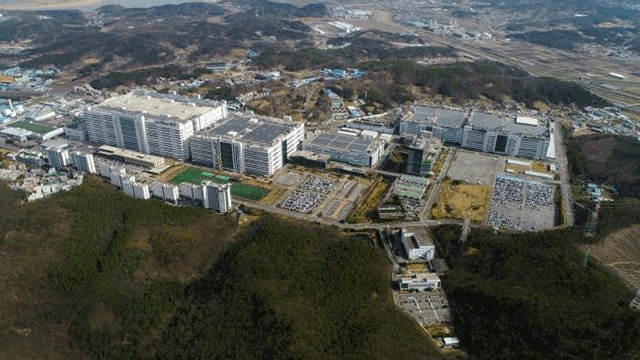
LG Display, too, last year announced a KRW 1.26 trillion "OLED new-technology" investment centered on its Paju site. This, however, is understood to be closer to a supplementary investment applying new process technology to existing 6th-generation lines.
For Jeong, who has only just broken the chain of losses and begun making money, finding a balance between financial soundness and large-scale new investment is no easy task.
At this year's shareholders' meeting, LG Display offered a somewhat conservative annual capital expenditure figure of around the mid-KRW 2 trillion range — similar to the level of the past two years.
Jeong said, "We will prepare future growth engines through cost innovation and competitive-edge technology," adding, "This year we will invest within a range that does not undermine financial soundness."
Gwak Horyung (horr@fntimes.com)
데일리 금융경제뉴스 Copyright ⓒ 한국금융신문 & FNTIMES.com
저작권법에 의거 상업적 목적의 무단 전재, 복사, 배포 금지

가장 핫한 경제 소식! 한국금융신문의 ‘추천뉴스’를 받아보세요~