





 이미지 확대보기
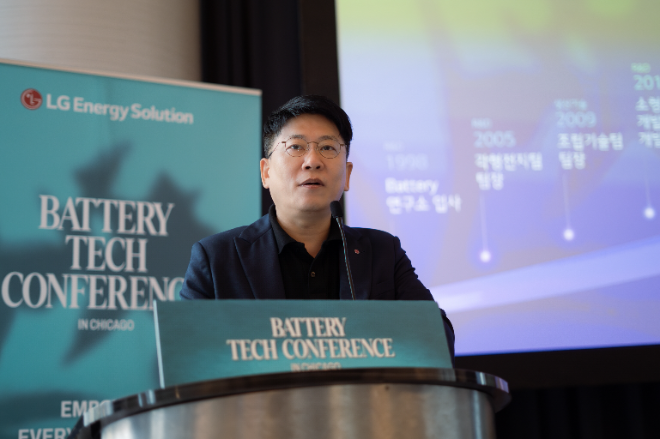
CEO Kim Dong-myung (president) has recently moved to monetize everything from U.S. tariff refunds to patents—one of the company's flagship intangible assets—in order to defend profitability against the fallout from the subsidy cuts.
Kim Dong-myung Turns 30 Years of Patents Into Profit
According to LG Energy Solution on the 22nd, its global patents surpassed approximately 59,000 on a registration basis and 100,000 on an application basis (based on internal counts) as of last month. LG Energy Solution is the first battery company in the world to exceed 100,000 global patent applications.In particular, patents can be leveraged as a new revenue source—through royalties and fees—via future contracts with external companies. This drive has gradually gained momentum since the inauguration of President Kim Dong-myung, a group technology expert and former researcher.
Since taking office, President Kim Dong-myung has emphasized building a virtuous cycle that extends beyond patent defense to monetization, describing patent competitiveness as follows: "In the battery industry, patents are a powerful weapon for maintaining global competitive advantage."
관련기사
Samsung SDI's Returns Run Six Times That of LG Energy Solution… But Why?Cathode Rivals L&F and Ecopro BM: Why a Two-to-One Gap in Share Gains?LG Electronics CEO Ryu Jae-cheol's Robot Ambitions: What's Behind the CompetitivenessLG Electronics Transcends Manufacturing: Robotics Is Only the Tip of the IcebergDoosan Fuel Cell Posts KRW 100 Billion Operating Loss, Yet Delivers 11x Returns to Investors
Ultimately, Sunwoda Group raised the white flag and signed a patent license agreement with LG Energy Solution this month. Sunwoda Group must pay LG Energy Solution technology usage fees, including royalties. Neither company disclosed the exact royalty figures, but the industry estimates the deal could be worth up to several hundred billion won.
A LG Energy Solution official said, "Going forward, we will continue to accelerate future growth based on our core technologies and premium patents, and build a virtuous cycle in which fair compensation for technological innovation continues."
Declining Cash Power, Rising Financial Burden
Beyond patent monetization, LG Energy Solution is also focusing on generating cash by applying for tariff refunds from the U.S. government. Earlier, LG Energy Solution filed for tariff refunds totaling approximately KRW 300 billion from the U.S. government, of which it is known to have received about KRW 100 billion.The reason LG Energy Solution is moving to secure cash like this lies in the profitability crisis stemming from the reduction of U.S. electric vehicle subsidies, its declining cash power, and the resulting expansion of its financial burden.
Starting this year, the U.S. government reduced the local production subsidy (AMPC) under the existing Inflation Reduction Act (IRA). As a result, LG Energy Solution—which had reaped enormous subsidy benefits after making preemptive, large-scale investments in the North American market—took a direct hit.
LG Energy Solution maintained profitability with operating profits of KRW 575.4 billion in 2023 and KRW 1.3461 trillion in 2024, when the EV chasm was at its peak. However, excluding subsidies, these turned into operating losses of KRW 904.6 billion and KRW 300.7 billion, respectively.
In the first quarter of this year, LG Energy Solution posted consolidated revenue of KRW 6.555 trillion and an operating loss of KRW 207.8 billion. Even this figure includes KRW 189.8 billion in subsidies; excluding them, the operating loss widens to approximately KRW 397.6 billion.
While LG Energy Solution is expected to turn a profit in the second quarter of this year with an operating profit of around KRW 200 billion, its cash-generating capacity, including cash flow, remains sluggish.
According to THE COMPASS, the AI analytics platform built by the Korea Financial Times, LG Energy Solution's operating cash flow—which had been maintained at around KRW 4 trillion through last year—is projected to turn negative this year, to around minus KRW 1 trillion.
Free cash flow (FCF), which subtracts capital expenditure (CAPEX) from total operating cash flow, is estimated to reach around minus KRW 12 trillion this year, widening the negative margin from about minus KRW 10 trillion last year. The company aims to cut its CAPEX—which reached KRW 10 trillion annually through last year—by about 30% this year, yet the negative FCF margin is widening because the cash generated from operations is shrinking.
LG Energy Solution's concern is not limited to its declining cash power. In February, the company issued corporate bonds worth approximately KRW 1.5 trillion, citing the accelerated transition to ESS (energy storage systems) and debt repayment. On top of this, its financial burden increased as it raised KRW 269.1 billion in fund bonds from the Export-Import Bank of Korea in the first quarter of this year for supply chain stabilization.
LG Energy Solution's debt-to-equity ratio, which had been managed at around 120% each year, also rose to 140% as of the first quarter of this year. As of the first quarter, long-term liquidity borrowings—the portion of long-term debt due within one year—stood at KRW 1.35 trillion, up about 34% from the same period last year.
An IB industry official explained, "LG Energy Solution is expected to lower its financial burden from the second quarter by using funds raised from the liquidation of joint ventures for debt repayment and the like, but operational profits will still take time, pending a recovery in EVs," adding, "It is diversifying its revenue portfolio through measures such as the patent monetization that has recently gained momentum."
Kim JaeHun (rlqm93@fntimes.com)
데일리 금융경제뉴스 Copyright ⓒ 한국금융신문 & FNTIMES.com
저작권법에 의거 상업적 목적의 무단 전재, 복사, 배포 금지

가장 핫한 경제 소식! 한국금융신문의 ‘추천뉴스’를 받아보세요~