




 이미지 확대보기
On the 29th, Samsung Electronics decided on a third-quarter cash dividend of KRW 4,601 per share for both common and preferred stock. The amount includes the regular quarterly dividend of KRW 376 per share and forms part of the company’s total shareholder return plan for this year. The dividend will be paid on Nov. 27.
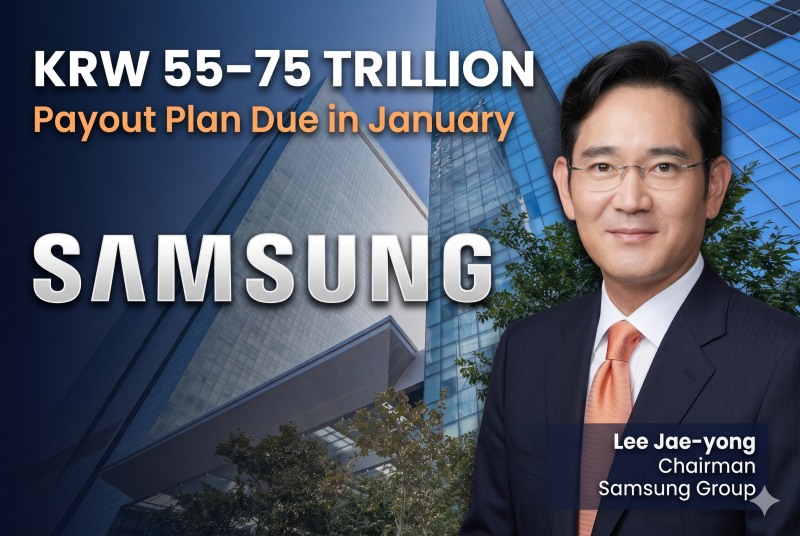
The company projected total shareholder returns for this year at KRW 90 trillion to KRW 110 trillion. Excluding KRW 35 trillion that has already been executed or decided, the remaining funds come to KRW 55 trillion to KRW 75 trillion. The remaining funds include cash dividends and a substantial amount of share buybacks and cancellations. The company is also considering adjusting the proportion of preferred shares in its buybacks, given the price gap between common and preferred stock. The final size of the remaining funds, the specific implementation plan and the next shareholder return policy, which will apply from 2027, are to be finalized at a board meeting in late January next year.
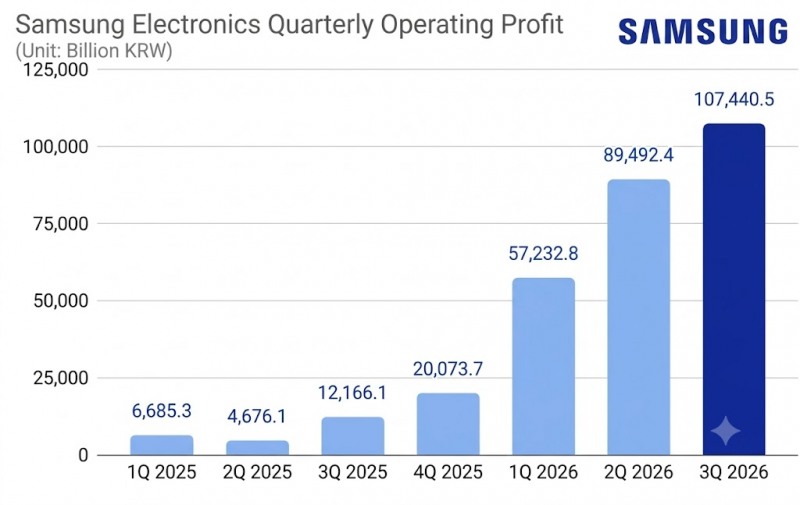
On a consolidated basis, third-quarter revenue was KRW 195.3 trillion and operating profit was KRW 107.4 trillion, up 14% and 20% from the previous quarter, respectively. Both revenue and operating profit set new records for the fourth consecutive quarter. Earnings per share hit an all-time high of KRW 11,462 for common shares and KRW 11,492 for preferred shares, each up 6% from the previous quarter.
The Device Solutions (DS) Division, which drove the results, posted revenue of KRW 147.1 trillion and operating profit of KRW 106.5 trillion. Memory revenue rose 16% from the previous quarter to KRW 140.7 trillion. This reflected sharply higher sales of high-bandwidth memory (HBM4) for artificial intelligence (AI) and a response to demand for server solid-state drives (SSDs). Memory prices rose across all applications as demand remained strong, led by servers.
관련기사
Will Samsung Electronics Name Successors to DS, DX Division Heads’ Concurrent Memory, Mobile Posts?Samsung, SK hynix on Course for KRW 650 Trillion Profit, 2.5 Times Start-of-Year ForecastsBeyond Samsung and SK hynix: Jusung Engineering Leads Korean Chip Stocks with 610% ReturnSamsung, SK hynix Face a KRW 250 Trillion Question: Reward Shareholders or Reinvest in AI
System LSI increased revenue by supplying system-on-chips (SoCs) and image sensors for new products in the second half, and it also firmed up its custom SoC business through cooperation with new customers. The foundry business improved earnings on higher sales of HBM base dies and expanded sales of leading-edge processes. It also continued to win orders from 2-nanometer high-performance computing (HPC) customers, including large hyperscalers.
The Device eXperience (DX) Division, by contrast, posted revenue of KRW 52.1 trillion and an operating loss of KRW 800 billion. Mobile Experience (MX) improved from the previous quarter as average selling prices (ASP) rose on new flagship products such as the Galaxy Z Fold8 and a larger share of premium products. Cost pressure from higher memory prices continued. Networks struggled due to weaker sales in North America and lower software revenue. Visual Display (VD) saw demand fall after the end of a global sports event, while Digital Appliances posted lower profit despite strong sales because of higher raw material and logistics costs.
Display posted revenue of KRW 8 trillion and operating profit of KRW 1.1 trillion. Small and mid-sized panels increased sales and profit by supplying customers’ new products on time, while large panels improved profitability through sales of high-end products and cost reductions. Harman recorded revenue of KRW 4.3 trillion and operating profit of KRW 600 billion, as solid sales of automotive electronics and audio products were joined by the effect of U.S. tariff refunds.
Lower exchange rates for major currencies weighed on results. Declines in the dollar, euro and other major currencies had a negative effect of about KRW 10 trillion on companywide operating profit versus the previous quarter, centered on the components business. Research and development spending came to KRW 14.4 trillion as the company continued to invest in securing future technology competitiveness.
Samsung Electronics put this year’s capital expenditure at KRW 84.4 trillion, of which the DS Division accounts for KRW 76.8 trillion and Display for KRW 3.9 trillion. In memory, it is investing in new production facilities and infrastructure to meet AI demand, while in foundry it is investing mainly in its Taylor, U.S., plant.
For the fourth quarter, the company expects semiconductor demand to continue, supported by faster adoption of AI agents and the launch of new GPUs and CPUs. It plans to expand sales of HBM4, high-performance DDR5, QLC SSDs and server SSDs, and to increase mass production of 4-nanometer and 2-nanometer leading-edge processes in foundry. In 2027, it plans to pursue mass production of HBM4E and production of 2-nanometer AI and HPC chips at the Taylor plant. The DX Division will focus on premium product sales aimed at the year-end peak season and on operational efficiency.
Gwak Horyung (horr@fntimes.com)
데일리 금융경제뉴스 Copyright ⓒ 한국금융신문 & FNTIMES.com
저작권법에 의거 상업적 목적의 무단 전재, 복사, 배포 금지

가장 핫한 경제 소식! 한국금융신문의 ‘추천뉴스’를 받아보세요~