




 이미지 확대보기
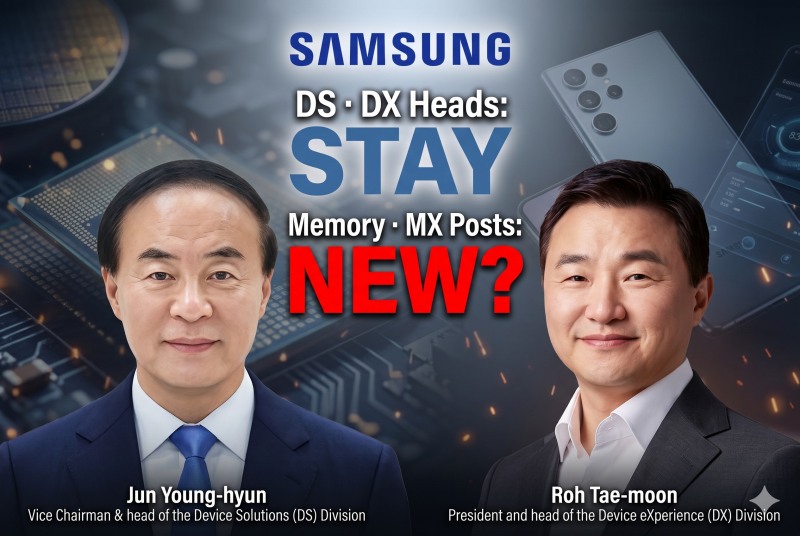
Both men concurrently head their divisions and a core business unit. Even if the division-head structure is maintained, a key variable is the possibility that the Memory Business and Mobile eXperience (MX) Business heads will be split off and filled with successors.
Samsung Electronics typically announces its reshuffle of presidents and executives in the last week of November. In the past, the presidents’ reshuffle came in the first week of December, but the announcement has been moved earlier in recent years to respond quickly to global economic uncertainty and market changes.
The DS Division continues to see improving earnings on the back of the memory chip boom. The DX Division, by contrast, must contend with rising component prices and intensifying competition in its smartphone and home appliance businesses. With results diverging by business, observers are watching whether changes to the organizational structure will follow.
There is a view that replacing Vice Chairman Jun or President Roh as division heads is unlikely for now. Both were newly appointed or reappointed as inside directors at last year’s regular shareholders’ meeting, and their terms as inside directors run through March 2028.
관련기사
Samsung, SK hynix on Course for KRW 650 Trillion Profit, 2.5 Times Start-of-Year ForecastsBeyond Samsung and SK hynix: Jusung Engineering Leads Korean Chip Stocks with 610% ReturnSamsung, SK hynix Face a KRW 250 Trillion Question: Reward Shareholders or Reinvest in AIWhy Samsung Lost Its Market-Cap Crown to SK hynixOnce Samsung's Cash Cow, Galaxy Now Teeters on the Brink of a Loss
Vice Chairman Jun became head of the Memory Business in 2014 and led the DRAM and NAND flash businesses. He moved to Samsung SDI as chief executive in 2017, returned to Samsung Electronics in 2023, and took the helm of the DS Division in May 2024. At that time, Samsung Electronics was lagging in responding to high-bandwidth memory (HBM), and restoring its semiconductor competitiveness had become a pressing task. Since Vice Chairman Jun took office, the memory market has improved and HBM supply expansion has been pursued, and the DS Division’s earnings have shown signs of recovery.
The question is whether a successor will be named to the Memory Business head post that Vice Chairman Jun holds concurrently. Because the DS Division head oversees the entire division, including Foundry and System LSI, separating the Memory Business head post would allow him to focus on business operations and customer relations. As competition in next-generation memory such as HBM4 heats up, it has also become important to translate development capabilities into mass-production and supply results.
On the other hand, with earnings improving, it is also possible that the existing concurrent structure will be maintained.
Among the candidates, Executive Vice President Hwang Sang-joon, head of the DRAM Development Office, is mentioned. Executive Vice President Hwang is a technology expert who has led the development of next-generation memory, including HBM. Samsung Electronics is applying its 10-nanometer-class sixth-generation (1c) DRAM and a 4-nanometer foundry process to HBM4 to strengthen its performance competitiveness.
Regarding HBM4 development, Executive Vice President Hwang explained: “Samsung Electronics’ HBM4 broke with the precedent of applying previously proven processes by adopting the most advanced processes, such as 1c DRAM and the foundry 4-nanometer process. By securing ample headroom for performance expansion through process competitiveness and design improvements, we were able to meet customers’ demands for higher performance in a timely manner.” Attention is on whether Executive Vice President Hwang, who has led next-generation memory development, will also take charge of running the business unit.
President Song Jai-hyuk, Chief Technology Officer (CTO) of the DS Division, is also a figure to watch from a technology-strategy perspective. President Song has emphasized technology cooperation spanning memory, logic and packaging, as well as the development of customized HBM. As the AI chip race expands beyond memory performance to a combination of foundry processes and advanced packaging, the role of linking these technologies is becoming increasingly important. However, because the roles of CTO and Memory Business head differ, it is difficult to predict a move by President Song to a business unit head post based on the importance of technology strategy alone.
In the DX Division, the key question is whether President Roh, the division head, will give up the MX Business head post. President Roh is a development specialist who has led the MX Business since 2020. After the death of former Vice Chairman Han Jong-hee in April 2025, he served as acting head of the DX Division, and was named DX Division head and chief executive (President) in the regular reshuffle that November. He currently also serves as MX Business head, overseeing the smartphone business and the finished-products business as a whole.
The MX Business faces mounting cost pressure from rising prices of key components such as memory. Its profitability is expected to hinge on whether it can pass component price increases on to selling prices and how it adjusts its product mix and supply chain. The market sees a high likelihood that the MX Business posted a loss in the third quarter, following the second quarter. With component cost burdens growing, the need to reorganize the business unit’s operations is also being raised.
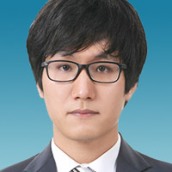
President Choi Won-joon, Chief Operating Officer (COO) of the MX Business and head of its R&D Office, is cited as a possible successor. The MX Business head post requires an understanding of product development and technology strategy, and President Roh also rose to the post after serving as head of the R&D Office.
President Choi earned his bachelor’s and master’s degrees in electrical engineering from Seoul National University, and his master’s and doctoral degrees in electrical engineering from Stanford University in the United States. After working at Qualcomm, he joined Samsung Electronics in 2016 and led the development of the Galaxy series. He was promoted to president in a one-off, off-cycle reshuffle in March 2025. His mix of development and business operations experience is why he is mentioned as a candidate.
Whether further changes will follow at other DX business units at year-end remains to be seen, as their heads were replaced recently. Executive Vice President Kim Cheol-gi has led the Home Appliances (DA) Business since April 2025, a pick that put a marketing specialist in charge of a business traditionally led by developers. Executive Vice President Kim has focused on strengthening premium products and brand competitiveness and improving business efficiency. Amid continued pursuit by Chinese rivals and cost pressure, the challenge is how much he can lift profitability.
At the Visual Display (VD) Business, President Lee Won-jin replaced President Yong Seok-woo in May this year. A former Google vice president, President Lee has built experience in services and marketing. His appointment aligns with the push to expand the TV business from a hardware-sales focus toward content and platforms. With only about six months in the post, the year-end reshuffle is more likely to emphasize the business transition now under way than another replacement.
Gwak Horyung (horr@fntimes.com)
데일리 금융경제뉴스 Copyright ⓒ 한국금융신문 & FNTIMES.com
저작권법에 의거 상업적 목적의 무단 전재, 복사, 배포 금지

가장 핫한 경제 소식! 한국금융신문의 ‘추천뉴스’를 받아보세요~