





 이미지 확대보기
A Different Path Despite Expanded U.S. Tariff Measures
Section 232 of the U.S. Trade Expansion Act grants the president authority to impose high tariffs on specific imported goods deemed a threat to national security.While originally aimed at raw steel and aluminum, the U.S. Department of Commerce expanded the scope last August to include 407 derivative products, including transformers. The tariff calculation method also shifted this past April from being based on the metal content value to the full price of the finished product, further increasing the burden on manufacturers.
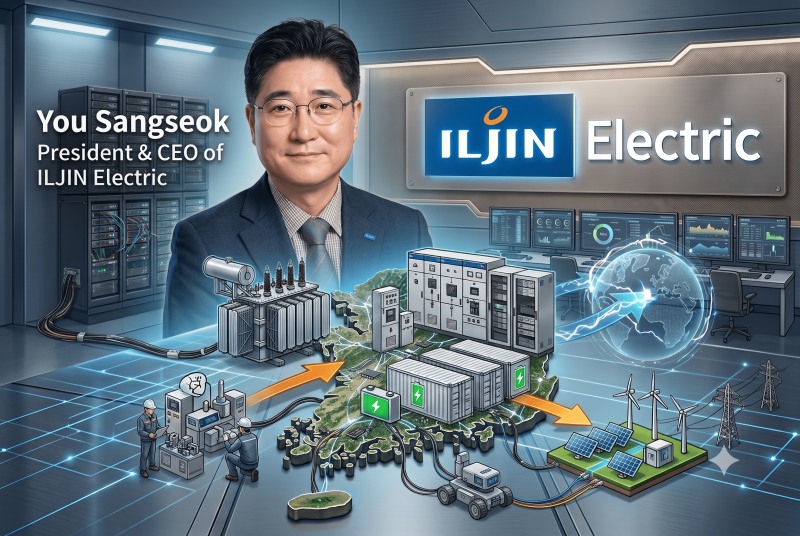
Iljin Electric's U.S. subsidiary, ILJIN ELECTRIC USA, by contrast, functions solely as a sales entity. The company continues to manufacture at its domestic Hongseong plant and export the output directly — making it the only one of the four major players in the power equipment market without a U.S. production base.
Lack of Skilled U.S. Workforce Drives Decision to Produce Domestically and Export
Iljin Electric continues to weigh whether to expand production capacity, though no decision has been made on whether such expansion would take place in the U.S. or domestically. The company has also not yet considered acquiring an existing U.S. plant.
관련기사
After weighing the pros and cons of expanding in the U.S. versus at home, Iljin Electric ultimately chose to expand its Hongseong Plant No. 2. Regarding further expansion, a company official said: "We are not yet actively pursuing additional expansion. We're still in the stage of monitoring market conditions and order volumes."
Performance Improves Following Hongseong Plant No. 2 Launch
Iljin Electric's transformer production capacity stood at KRW 200 billion in 2023 and KRW 220 billion in 2024. Following the October 2024 launch of Hongseong Plant No. 2, capacity grew to KRW 430 billion last year — a 95.5% increase in a single year. The company also plans to raise ultra-high-voltage cable production capacity to roughly KRW 620 billion, meaning domestic expansion alone should provide sufficient capacity (CAPA) headroom for the time being.Earnings have grown accordingly. The company's overseas order backlog rose 6.1% in just three months, from USD 1.23481 billion at the end of last year to USD 1.30964 billion in the first quarter of this year.
Growth at the U.S. sales subsidiary has been even steeper. Total assets rose 32.7%, from KRW 185.8 billion at the end of last year to KRW 246.5 billion in the first quarter of this year. Revenue jumped 79.3%, from KRW 123.17 billion in 2024 to KRW 220.85 billion last year, and reached KRW 39.7 billion in the first quarter of this year alone.
The net profit margin slipped slightly from 2.52% in 2024 to 2.08% last year, before nearly sextupling to 12.32% in the first quarter of this year. First-quarter net profit of KRW 4.89 billion already exceeds the company's entire net profit of KRW 4.6 billion for all of last year.
The parent company's results are also solid. First-quarter revenue in the heavy electrical equipment division reached KRW 120.7 billion, up 60.6% year-on-year, with operating profit of KRW 29.2 billion, up 81.7%. Company-wide, Iljin Electric posted revenue of KRW 506.1 billion and operating profit of KRW 50.8 billion in the first quarter, up 10.6% and 49.1% year-on-year, respectively. Last year's annual results — revenue of KRW 2.0446 trillion and operating profit of KRW 151.2 billion — marked an all-time high.
Share price has climbed alongside earnings. Iljin Electric's stock, which started last July in the KRW 40,000 range, more than tripled to a peak of KRW 144,100 this past May as earnings improved. The stock has since pulled back amid a broader market correction.
Export Growth Driven by Rising Demand for Power Equipment — Tariff Risk Also in Focus
The surge in orders reflects a broader structural shift in the industry. The power equipment sector has entered a period of structural growth, driven by the convergence of global grid replacement demand due to aging infrastructure, expanding renewable energy adoption, and rising investment in AI and data center infrastructure. Iljin Electric has benefited from this trend as well.As the company seeks to expand exports further, it is also reportedly paying close attention to tariff issues. In March, Iljin Electric signed a consulting contract on "steel and aluminum tariff item advisory services," worth KRW 60 million and running from March through December of this year — its first tariff- and trade-related advisory contract since 2020.
However, the contract reportedly relates specifically to advisory work concerning aluminum wire exports. A company official clarified: "This advisory work is related to tariffs on exports, but the research is not being conducted to explore establishing a production subsidiary in the United States."
Jung Jina (urzinnie@fntimes.com)
데일리 금융경제뉴스 Copyright ⓒ 한국금융신문 & FNTIMES.com
저작권법에 의거 상업적 목적의 무단 전재, 복사, 배포 금지

가장 핫한 경제 소식! 한국금융신문의 ‘추천뉴스’를 받아보세요~