





However, Samsung Biologics initially struggled. Despite Samsung's KRW 2-3 trillion investment, the company remained in the red for six years after its 2011 founding, with no tangible results. It was even considered a latecomer in the domestic market, trailing behind Celltrion and Hanwha Chemical.
The situation is different now. In recent years, Samsung Biologics has established itself as a global hub for biopharmaceutical production, backed by overwhelming production capacity (CAPA) and quality competitiveness. Its explosive growth curve has led the industry to dub Samsung Biologics as "Samsung's relief pitcher."
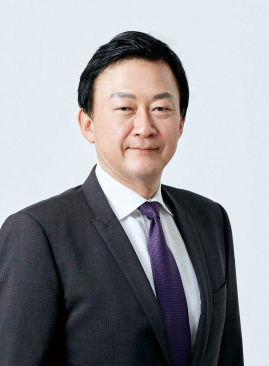
Born in 1961, John Rim graduated from Columbia University with a degree in chemical engineering, obtained a master's degree in chemical engineering from Stanford University, and completed an MBA at Northwestern University. He then held various positions at multinational pharmaceutical companies Roche and Genentech, including production, sales, development, and CFO roles.
Rim joined Samsung Biologics in 2018 as the head of the CMO2 Center. In 2020, during the COVID-19 pandemic, he successfully secured a vaccine production contract with Moderna amid fierce competition. Recognizing his achievements, he was appointed as the company's CEO and President in December of that year.
관련기사
Samsung Biologics Replaces CFO and R&D Head... Will It Find New Momentum This Year?K-PharmaBio’s First 'KRW 4 Trillion Club' Member – Samsung Biologics Eyes KRW 5 Trillion with Unmatched Excellence in CapacityPharmaceutical DNA in Kolmar Korea and COSMAX... True Commitment to R&DHD Hyundai Liquidates Loss-Making Bio Subsidiary and Starts OverKoo Kwang-mo Invests in Canadian Lithium Extraction Company, Accelerating 'Cleantech' Growth
These achievements are largely due to Rim's on-site management strategy, leveraging his global network. In 2018, Samsung Biologics had only three global big pharma clients - Pfizer, AstraZeneca, and Janssen. Now, it has successfully partnered with 17 out of the top 20 big pharma companies (as of October 2024).
With increased orders, the company's performance has grown rapidly. Samsung Biologics' annual revenue jumped from KRW 1.5860 trillion in 2021 to KRW 3.0013 trillion the following year, becoming the first in the pharmaceutical and biotech industry to join the "KRW 3 trillion club."
It then reached KRW 3.6946 trillion in 2023 and KRW 4.5473 trillion in 2024, again becoming the first in the industry to join the "KRW 4 trillion club." During the same period, operating profit steadily increased from KRW 537.3 billion to KRW 986.3 billion, KRW 1.1137 trillion, and KRW 1.3201 trillion.
John Rim is not content with these achievements. As part of his "super gap" strategy emphasized since his appointment, he continues to focus on expanding capacity. In CDMO, an outsourcing business, capacity equals competitiveness. The company's current capacity of 604,000 liters is the largest among global CDMOs.
With the completion of Plant 5, scheduled for operation in April this year, capacity will increase to 784,000 liters. CEO John Rim plans to further expand to Plant 8, aiming to secure 1,324,000 liters by 2032.
He remains eager to acquire more clients. CEO Rim's next target is Japan, the third-largest market after the US and Europe. By attracting Japanese clients, he aims to expand the order range from the global top 20 to the top 40 companies. To this end, a sales office will be opened in Tokyo.
At the regular shareholders' meeting on March 14, Rim emphasized, "To expand our order range beyond the global top 20 to the top 40 companies, we will open a sales office in Tokyo, Japan, and further strengthen cooperation with Asian clients, including those in Japan. We plan to maintain our world-class super gap through Plant 5, which will be completed next month."
Kim Nayoung, Korea Finacial Times (steaming@fntimes.com)
데일리 금융경제뉴스 Copyright ⓒ 한국금융신문 & FNTIMES.com
저작권법에 의거 상업적 목적의 무단 전재, 복사, 배포 금지

가장 핫한 경제 소식! 한국금융신문의 ‘추천뉴스’를 받아보세요~